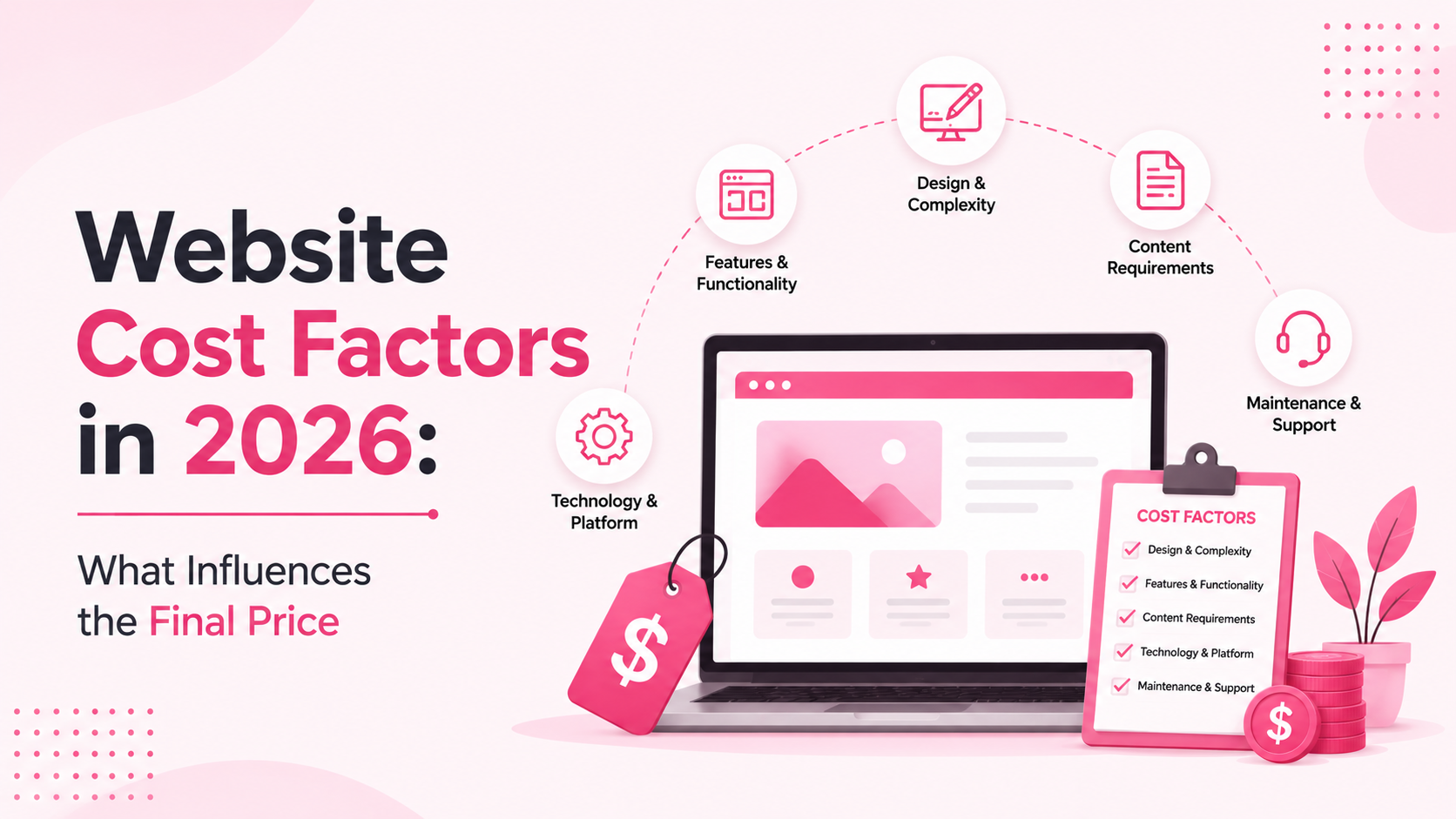
“How much does a website cost?” is one of the first questions almost every business asks when planning a new site, and it’s also one of the hardest to answer with a single figure. That’s because a website isn’t a fixed product. It’s a combination of design choices, features, technology, and ongoing support, and each of those pieces can shift the final price significantly.
Heading into 2026, the factors shaping website pricing have only grown more nuanced. Expectations around mobile performance, security, accessibility, and AI-assisted personalization mean that two websites that look similar on the surface can require very different levels of work behind the scenes. Understanding what actually drives the price helps you plan realistically and avoid being surprised later in the process.
Rather than focusing on numbers, this article breaks down the key factors that influence what you’ll pay for a website, so you know exactly what you’re evaluating when comparing options.
The Type of Website You’re Building
Not all websites serve the same purpose, and the type of site you need has one of the biggest impacts on overall investment. A simple informational site is a very different undertaking than a fully featured online store or a custom web application.
| Website Type | Typical Complexity | What Drives the Investment |
|---|---|---|
| Personal or portfolio site | Low | Simple layout, limited pages, minimal functionality |
| Small business website | Low to moderate | Multiple service pages, contact forms, basic SEO setup |
| E-commerce store | Moderate to high | Product catalogs, payment processing, inventory management |
| Custom web application | High | Custom logic, user accounts, integrations, ongoing development |
The further down this table you go, the more planning, development time, and testing is typically required, which naturally shifts the investment required.
Design: Templates vs. Fully Custom Builds
Design is often where the biggest price differences show up. A pre-built template can be customized relatively quickly since much of the visual structure already exists. A fully custom design, on the other hand, involves original wireframes, brand-specific visual direction, and unique layouts built from scratch.
Neither approach is inherently better for every business. A template can be a smart, efficient choice for a straightforward site, while a custom design becomes worthwhile when your brand identity, user experience, or competitive positioning depends on standing out visually. The right choice depends on your goals, not just your budget.
Features and Functionality
Every additional piece of functionality adds development time, testing, and long-term maintenance considerations. This is often where project scope, and therefore price, grows the most from the original plan.
Features that commonly increase the scope of a project include:
- Online booking or scheduling systems
- Membership portals or gated content
- Custom search and filtering tools
- Multi-language support
- Third-party integrations such as CRMs, email platforms, or payment gateways
- Interactive elements like calculators, quizzes, or configurators
It’s worth mapping out which of these your business genuinely needs now versus which could be added later, since building for future scalability is different from building everything up front.
The Technology and Platform You Choose
The platform behind your website plays a major role in both the build process and what happens after launch. Website builders offer speed and simplicity but can be limiting as a business grows. Content management systems like WordPress offer a strong balance of flexibility and ease of use for most businesses. Custom-coded or headless solutions offer the most control and performance but require more specialized development expertise to build and maintain.
There’s no universally “best” option here. A growing e-commerce brand has very different technical needs than a local service business, and the right platform should match where your business is headed, not just where it is today.
Content Creation and Copywriting
Many businesses underestimate how much content creation contributes to the overall project. Professionally written copy, optimized for both readers and search engines, takes strategy and time to get right. The same goes for photography, video, and custom graphics.
If a business supplies its own polished content, the project naturally moves faster. If content needs to be created from scratch, whether that’s SEO-focused copywriting, professional photography, or custom illustrations, that work becomes part of the overall scope and timeline.
SEO, Performance, and Technical Optimization
A website that looks great but loads slowly or isn’t structured for search engines won’t perform the way it should. Technical elements like clean site architecture, optimized images, proper schema markup, and mobile performance tuning all require specialized attention during development.
These aren’t cosmetic add-ons. They directly affect how visible your website is in search results and how well it converts visitors once they arrive, which makes this an area where cutting corners tends to cost more in lost opportunity later.
Ongoing Maintenance and Support
A website’s price doesn’t end at launch. Hosting, security monitoring, software updates, and periodic content changes are ongoing needs, not one-time tasks. Skipping this planning is one of the most common reasons businesses end up with outdated, vulnerable, or broken websites within a year or two of launch.
Factoring in support and maintenance from the start, rather than treating it as an afterthought, leads to a website that continues performing well long after the initial build is finished.
Who You Choose to Build It
Freelancers, small agencies, and larger established agencies all bring different levels of experience, process, and support to a project. A larger, more experienced team often brings a more structured process, broader skill sets across design, development, and SEO, and more reliable long-term support. A solo freelancer might offer more flexibility for a very simple project but can be riskier for anything requiring ongoing collaboration or complex functionality.
The right partner isn’t necessarily the cheapest or the most expensive option. It’s the one whose experience matches the complexity of what you’re building.
Questions to Ask Before Starting Your Project
Before committing to a website project, it helps to get clarity on exactly what’s included. Consider asking any potential partner:
- What’s included in the initial proposal, and what counts as a future add-on?
- Who owns the website’s code, content, and domain once it’s built?
- What does ongoing support and maintenance look like after launch?
- How are revisions handled during the design and development process?
- What’s the expected timeline, and what could realistically extend it?
Clear answers to these questions matter far more than comparing a single upfront figure, since they reveal what you’re really getting for your investment.
Build a Website That’s Worth the Investment
A website’s price is shaped by dozens of decisions working together, from the platform you choose to the features you need to the team you trust to build it. Understanding these factors helps you make informed decisions instead of choosing based on the lowest number on a quote.
At IPITechno, our web development team works with businesses to design and build websites that are planned around what actually matters for their goals, not a one-size-fits-all package. We’ll walk you through exactly what your project involves and help you build a website built to perform, not just to launch.
Reach out to IPITechno today to start planning a website built around your business, not a generic template.




Comments are closed