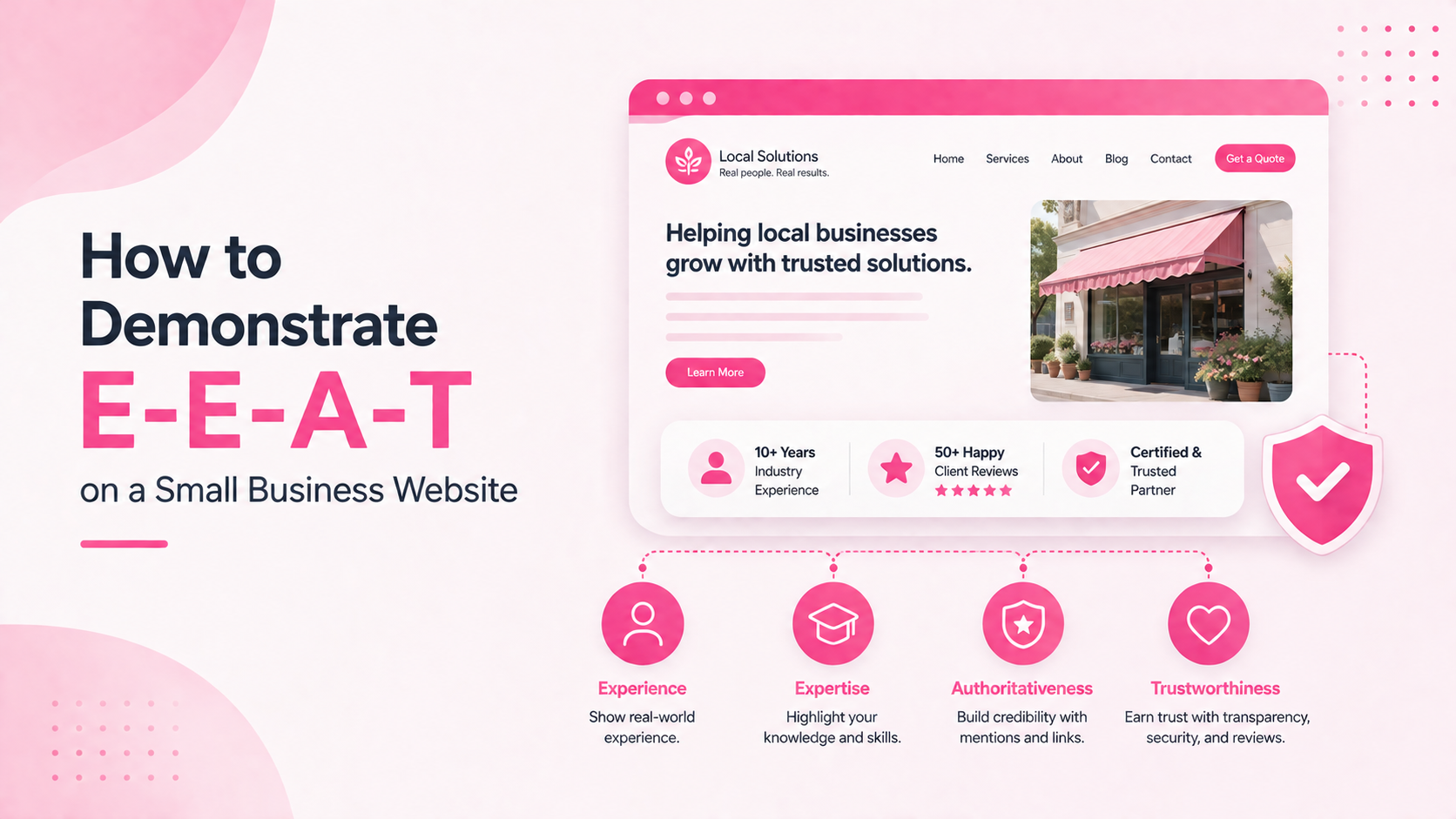
If you have spent any time researching SEO lately, you have probably come across the term E-E-A-T. It sounds technical, but the idea behind it is simple. Google wants to show searchers content from websites that are genuinely trustworthy, and E-E-A-T is how it tries to measure that trust.
For small businesses, this is actually good news. You do not need a massive budget or a team of writers to demonstrate E-E-A-T. You need real proof that your business is credible, experienced, and worth trusting, and most small businesses already have that proof, it just is not showing up on their website yet.
This guide breaks down what E-E-A-T means and exactly how to demonstrate it on a small business website.
What Does E-E-A-T Actually Stand For?
E-E-A-T stands for Experience, Expertise, Authoritativeness, and Trustworthiness. It comes from Google’s Search Quality Rater Guidelines, which are used to evaluate how helpful and reliable a website is.
- Experience means showing that you have real, first hand experience with the product, service, or topic you are talking about
- Expertise means demonstrating the knowledge and skill needed to speak on a topic credibly
- Authoritativeness means being recognized by others as a reliable source in your industry or niche
- Trustworthiness means your website and business are honest, transparent, and safe to interact with
Trustworthiness is considered the most important of the four, because even if a website shows experience and expertise, none of it matters if visitors cannot trust the business behind it.
Why E-E-A-T Matters for Small Businesses
Small business websites are often competing against much bigger companies with larger content teams and bigger budgets. E-E-A-T levels the playing field a little, because it rewards authenticity and real credibility over sheer content volume.
A local bakery with genuine customer reviews, a real address, and content written by the actual owner can outperform a much bigger competitor whose website feels generic and impersonal. Google, and more importantly, your customers, can tell the difference.
How to Demonstrate Experience
Experience is about proving you have actually done the thing you are writing or talking about, not just researched it. Share real photos of your work, your team, your location, or your process instead of relying only on stock images.
Write case studies or project breakdowns showing how you solved a real problem for a real client, and include specific details in your content that only someone with hands on experience would know. It also helps to add a blog or portfolio section showcasing completed work over time, since this gives visitors a clear record of what you have actually done.
How to Demonstrate Expertise
Expertise is about showing you know your industry well enough to be a reliable source of information. Create an author bio for anyone writing content on your site, including their role, background, and relevant experience.
Publish helpful, in depth content that goes beyond surface level advice, and make sure you are actually answering common customer questions thoroughly on your website instead of leaving them for social media or phone calls. Keeping your content updated as your industry changes matters too, since outdated information quickly hurts perceived expertise.
How to Demonstrate Authoritativeness
Authoritativeness is built through recognition from others, not just claims you make about yourself. Getting listed or mentioned on reputable industry websites, directories, or local business associations helps establish this, as does earning backlinks from relevant, trustworthy websites in your niche.
Collecting and showcasing reviews from real customers, whether on Google, industry platforms, or your own website, is one of the simplest ways to build this signal. Participating in local community events, sponsorships, or partnerships and mentioning them on your site can also strengthen how your business is perceived.
How to Demonstrate Trustworthiness
Trustworthiness is often the easiest area for small businesses to improve quickly, since it comes down to transparency. Display a real business address, phone number, and email, not just a contact form, and add a clear About page introducing the people behind the business.
Make sure your website uses secure practices, including HTTPS, so visitors know their information is safe. Being transparent about pricing, policies, and terms instead of hiding important details goes a long way, and so does responding to customer reviews, including negative ones, in a professional and helpful way.
Common Mistakes That Hurt E-E-A-T
Many small business websites unintentionally damage their own trust signals. Watch out for these common issues:
- Relying only on stock photos with no real team or workplace images
- Leaving contact information hidden or missing entirely
- Publishing thin content that does not actually answer visitor questions
- Ignoring or hiding negative reviews instead of responding to them
- Outdated information about services, pricing, or hours left live on the site
Let Us Help You Build Trust That Ranks
Demonstrating E-E-A-T is not a one time fix, it is an ongoing part of building a website that both search engines and real customers trust. Getting it right takes the right content strategy, technical setup, and consistent effort, and that is exactly what IPITechno specializes in. Our SEO service helps small businesses build genuine authority and trust signals into their website, so you rank higher and convert more of the visitors you already have. Contact IPITechno today and let us help your website earn the trust it deserves.




Comments are closed