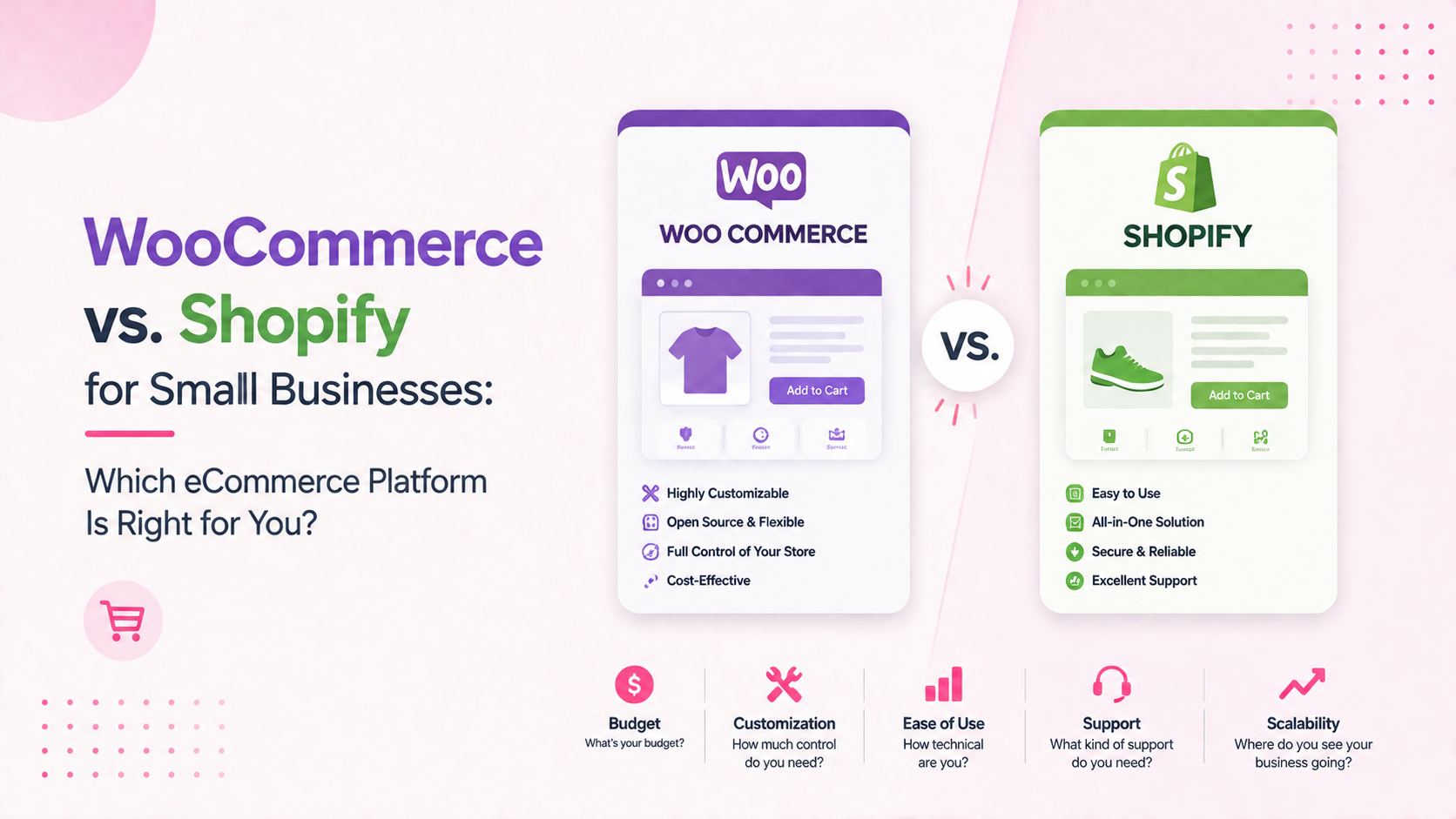
Starting an online store is exciting, but the very first decision you have to make can feel overwhelming. Which platform should you actually build your store on? Two names come up again and again: WooCommerce and Shopify. Both are popular, both power millions of online stores, and both can absolutely help a small business succeed. The right choice just depends on your needs, your budget, and how much control you want over your store.
This guide breaks down the real differences between WooCommerce and Shopify, so you can choose the platform that actually fits your business instead of just going with whatever is trending.
What Is WooCommerce?
WooCommerce is a free plugin that turns a WordPress website into a fully functional online store. Since it runs on WordPress, it gives you a huge amount of flexibility and control, but it also means you are responsible for more of the technical side, like hosting and security.
What Is Shopify?
Shopify is a fully hosted eCommerce platform built specifically for online stores. Everything, from hosting to security to updates, is handled by Shopify itself. You simply sign up, choose a plan, and start building your store using their tools and templates.
Ease of Use
Shopify is generally easier to set up and manage, especially for business owners with little to no technical background. The platform is designed to guide you through store setup, product listings, and payment configuration with a clean, simple interface.
WooCommerce has more of a learning curve, since it requires a WordPress website as its foundation. If you are not already familiar with WordPress, there is more to learn upfront, though the flexibility this brings is often worth it once you get comfortable with the platform.
Cost Comparison
Cost is one of the biggest deciding factors for small businesses, and it works differently on each platform.
WooCommerce itself is free, but running a store still involves costs like web hosting, a domain name, an SSL certificate, and any premium plugins or themes you choose to use. Depending on your setup, monthly costs can be quite low or can add up if you need multiple premium extensions.
Shopify works on a monthly subscription model, with plans that include hosting, security, and support built in. While this makes budgeting simpler and more predictable, it also means you are paying a recurring fee regardless of your sales volume, and additional apps for extended functionality often come with their own costs too.
Customization and Flexibility
This is where WooCommerce really stands out. Because it is built on WordPress, an open source platform, you have almost unlimited control over how your store looks and functions. You can customize code directly, choose from thousands of themes and plugins, and build a store that is truly unique to your brand.
Shopify offers solid customization through its theme store and app marketplace, but you are working within the boundaries of what the platform allows. Deeper customizations often require Shopify’s own coding language, Liquid, or hiring a developer familiar with the platform.
Payment Options
WooCommerce supports a wide range of payment gateways, including PayPal, Stripe, and many regional and local payment providers, giving you flexibility depending on where your customers are located.
Shopify also supports major payment gateways, and its own Shopify Payments system offers a smooth, integrated checkout experience. However, if you choose to use a third party payment gateway instead of Shopify Payments, Shopify charges an additional transaction fee on lower tier plans.
Scalability
Both platforms can scale with a growing business, but they do so differently.
Shopify handles hosting and server performance automatically, so as your traffic and sales grow, the platform manages the technical scaling behind the scenes with minimal effort on your part.
WooCommerce can scale just as well, but scaling depends heavily on your hosting provider and technical setup. A well optimized WooCommerce store on quality hosting can handle serious growth, but it requires more proactive management compared to Shopify’s built in approach.
Security and Maintenance
Shopify takes care of security updates, SSL certificates, and platform maintenance automatically, since everything is hosted and managed on their end. This is a major advantage for business owners who do not want to deal with technical upkeep.
With WooCommerce, security and maintenance are your responsibility, or your web development team’s responsibility. This includes keeping WordPress, plugins, and themes updated, along with managing backups and monitoring for vulnerabilities.
SEO Capabilities
Both platforms support strong SEO practices, but WooCommerce, running on WordPress, generally offers more built in flexibility for advanced SEO customization, thanks to the wide range of SEO plugins available in the WordPress ecosystem.
Shopify has solid built in SEO features as well and performs well for most small to medium stores, though some advanced technical SEO adjustments can be more limited compared to WooCommerce’s open structure.
WooCommerce vs. Shopify: Quick Comparison
| Factor | WooCommerce | Shopify |
|---|---|---|
| Cost structure | Free plugin, variable hosting and add on costs | Fixed monthly subscription |
| Ease of use | Steeper learning curve | Beginner friendly |
| Customization | Highly flexible, open source | Flexible within platform limits |
| Maintenance | Self managed or requires a developer | Fully managed by Shopify |
| Best for | Businesses wanting full control and customization | Businesses wanting a simple, all in one solution |
Which Platform Is Right for Your Business?
If you want full control over your store’s design and functionality, already have or are willing to build a WordPress website, and do not mind managing hosting and updates, WooCommerce is likely the better fit.
If you want a simple, all in one solution that handles the technical side for you, and you would rather focus on running your business than managing a website, Shopify is likely the smoother choice.
There is no universally correct answer here. The right platform depends entirely on your business goals, technical comfort level, and how much control you want over your store’s backend.
Let Us Build the Right Store for Your Business
Choosing between WooCommerce and Shopify is just the first step, and getting your store set up correctly from the start makes a real difference in how it performs. At IPITechno, our Web Development service helps small businesses build, customize, and launch online stores on the platform that truly fits their goals, whether that means a fully tailored WooCommerce build or a polished Shopify store. Reach out to IPITechno today and let us help you build an online store that is ready to grow with your business.




Comments are closed